
By Eilidh Akilade
Ria Andrews, our host, appears. Red hair, red chairs, before the red cinema screen announcing the inaugural Jali Weekender, in a yellow paint-like type.
Today, the Jali Weekender asks how Black, African and diaspora communities can feel truly seen and included in Scotland’s cultural landscape. Ria – an artist and DJ – introduces the panellists. Lisa Williams is the founder of Edinburgh Caribbean Association. Emanuel Carlos is a dancer and choreographer, who co-founded Associação Pangue D’Ami (Jipangue) in Lisbon. Rhea Lewis is a creative producer and Co-Founding Co-Director at Project X Dance CIC. Halina Rifai works with We Are Here Scotland and is a podcast and audio producer. ‘Everyone is [sitting] in the order of the bios which was not planned at all,’ says Ria, and we all laugh.
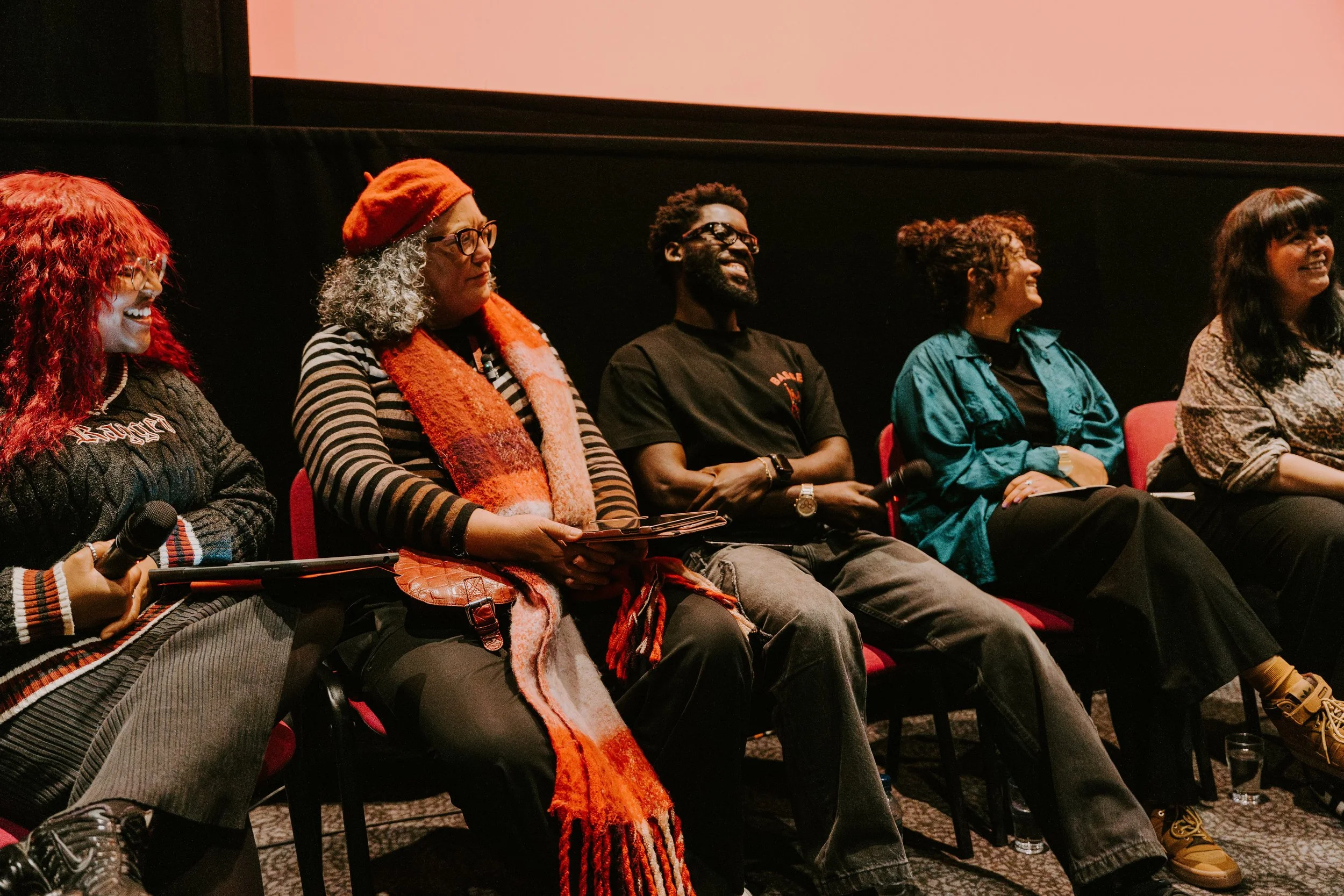
Photo credit: Uchechi (@byuchechi)
Ria asks: ‘In your experience, what does community feel like in practice? What makes a community real and meaningful in your work?’ The panellists nod, slowly – understanding, listening. Lisa speaks first, and wonders if we can hear her, without a microphone; Emanuel, Halina and Ria each attempt to pass their microphones; they want Lisa to be heard. Lisa accepts the microphone from Emanuel and asks, ‘Is that about right? There? Okay, perfect.’
For Lisa, Edinburgh Caribbean Association – a multigenerational group – brings individuals together. In founding, some ten years ago now, Lisa thought of her children, of ‘finding courtesy aunts and uncles for them’ – and then, in the room, a child cries out, right on time. We call out for community, for family. ‘It’s also a chance for us to be quite loud; because in a place like Scotland you’re kind of expected to be quite quiet and whisper,’ she says, in a staged diminuendo.
The microphone welcomes Rhea and she opens her notebook, smiling. At Project X, they always have food at rehearsals and meetings to ensure a safe space. It centres ‘coming together, making an experience [...] building trust’ - such is active, not passive.
Emanuel sees community as ‘finding yourself through others’. Emanuel is interested in belonging, not inclusion. For Emanuel, inclusion demands we fit into another’s space; belonging sees us create our own space. The room sits with his thoughts in this, the inaugural Jali Collective, and it is likely one of such spaces. Halina speaks to this, on We Are Here Scotland: ‘We are not for everyone.’ But we are for ourselves.
Ria asks: ‘[H]ow [did] each of you came into your role as cultural or creative changemakers?’
It starts with recognising a lack. On arriving in Lisbon, Emanuel wondered, ‘Where is the movement?’ His hand opens, upwards; then, turns downwards, fingers spread before coming together again and again - gathering. Through movement, he gathered his ‘village’.
Project X, too, is a collaboration – here, with Ashanti Harris and Mele Broomes. Rhea says that they’re ‘learning as we’re going [...] coming together as a collective.’ The rules are not set.
Lisa remembers visiting the Caribbean as a child, often. ‘[Y]our veranda is your discussion place,’ says Lisa, ‘Our door wasn’t even locked.’ Doors are locked here, in Scotland. And it is too cold, often, to sit and talk on verandas; no architecture for it, at least for now. The Jali Weekender, then, is a different kind of veranda. We sit down, we listen, we talk.
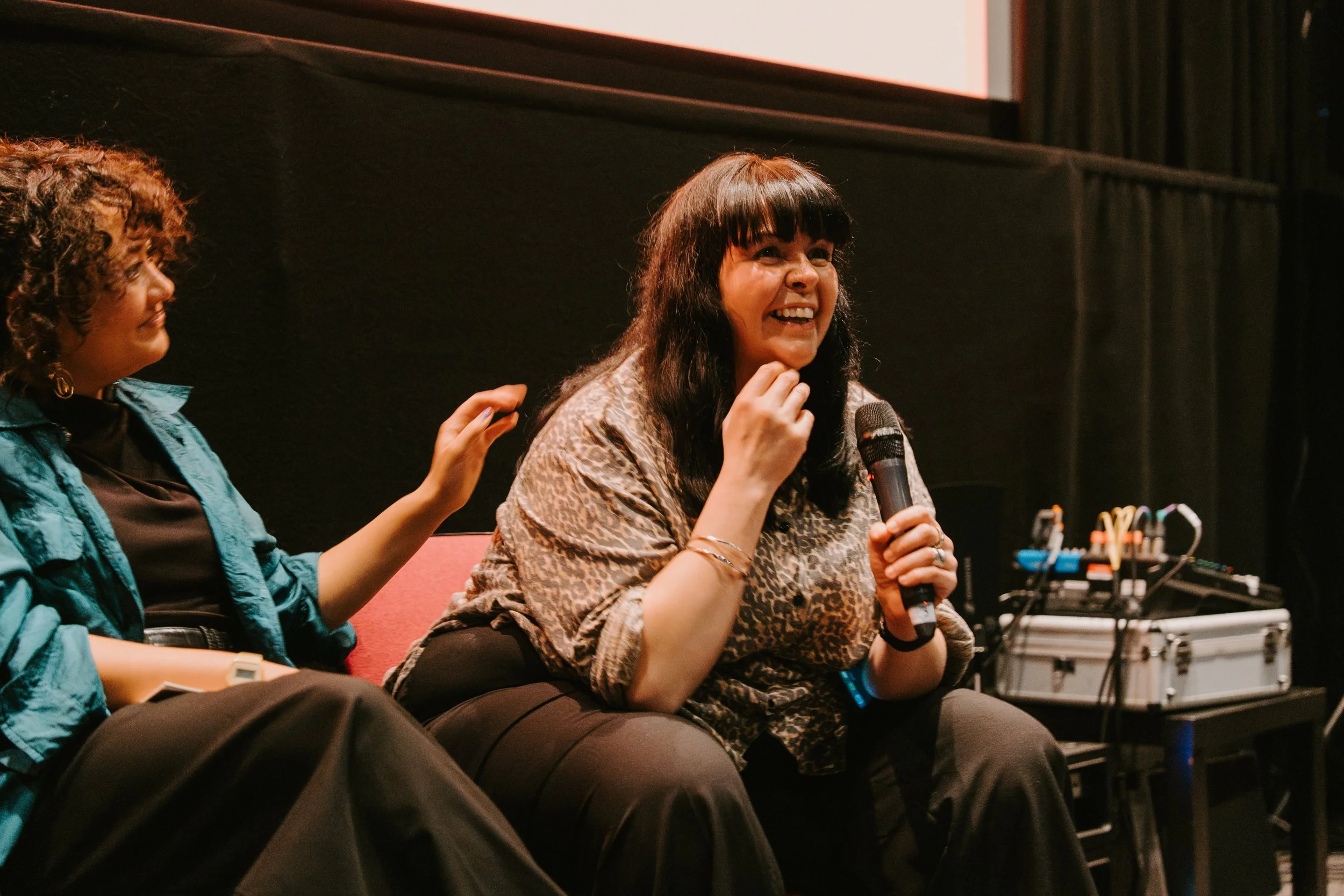
Photo credit: Uchechi (@byuchechi)
Halina speaks again, and the child calls out, ‘Mama,’ once or twice. Halina remembers, as a child, the racism her father faced in Scotland; her brothers now live abroad and don’t wish to return to Scotland due to this racism. It’s difficult to speak about: Rhea presses her hand against Halina’s back and in this, she is held and that holding is witnessed by us all. And so, Halina, with Ica Headlam, wanted to create a collective which truly listened to and empathised with BPOC communities – We Are Here Scotland does so.
Ria asks: ‘What opportunities do organisations miss out on when they don’t prioritise access or inclusion of Black and Global Majority (and marginalised communities more widely) in their programming and creative spaces?’
For Rhea, we should be able to ‘share different narratives, different stories’. The child sounds out – long, high pitched – and Rhea says, ‘What a beautiful voice you have.’ And the room smiles, with the child. More than one story is welcome here.
Those who do not engage with stories outwith the colonial canon, Lisa says, are ‘at a disadvantage’. An attempt to ‘exclude certain narratives’ is beneficial for no one. Emanuel agrees: it’s about ‘bringing the right people to the room,’ and so we look around this room and nod. Halina too reminds us that funders and programmers must ‘recognise the excellence of the communities,’ and we nod again.
Ria asks: ‘Could you share a moment when your efforts to ensure inclusivity felt particularly successful, meaningful or impactful?’
It is not a response but soon, the child leaves and their adult holds their hand as they walk past the stage and its panellists. The room waves them off. ‘Bye, bye,’ the panellists all smile and hope the child has felt the warmth of this space made for them, made with them in mind. The child is welcome here – curls, calls, and all.
Emanuel looks to Ria, his collaborator on H.A.I.R. – a project exploring Black hair stories – at Edinburgh Festival Carnival. Ria speaks of her role in H.A.I.R. and, in this, the roles of panellist and host are not so fixed, now, and that fluidity is to be celebrated.
Edinburgh Caribbean Association brought food, music and conversation to the National Museums of Scotland. ‘They said that was the most amount of Black people they’d ever seen [...] coming in, for years,’ Lisa says. No surprises but the room laughs still - the comedy is unsaid, but known.
The child is out of earshot, now. They don’t hear Halina or Rhea’s answers (and an audio recording cuts out here, so there is no way of returning later) but they imagine the audience nods and shares a smile, or two, in response. Like usual.
The child imagines that Ria asks: ‘Any questions?’
There isn’t time to answer everything – we’re all thrumming with thoughts, so many thoughts – but Ria makes time for a couple of comments. Soon, the child imagines, the mics turn off and the house lights lift. And yet, the audience and panellists congregate on the stage, while bags and jackets remain tucked into seats. Talking talking talking, still, and centred here.
The panel discussion Centring Black, African and diaspora audiences in Scotland took place on Friday 31 October 2025 at the inaugural Jali Film Weekender.