In Conversation: Khartoum
By Eilidh Akilade
Five participants: Khadmallah, Wilson, Loakin, Majdi, Jawad. Before interviews, they sit in a row of five seats with their backs to the camera – cinema like, for cinema-viewing. Five directors, too: emerging Sudanese filmmakers Anas Saeed, Rawia Al Hag, Brahim Snoopy and Timeea M. Ahmed, accompanied by Phil Cox. They appear at the frames’ edges, anchored to their cameras, mics, lights.
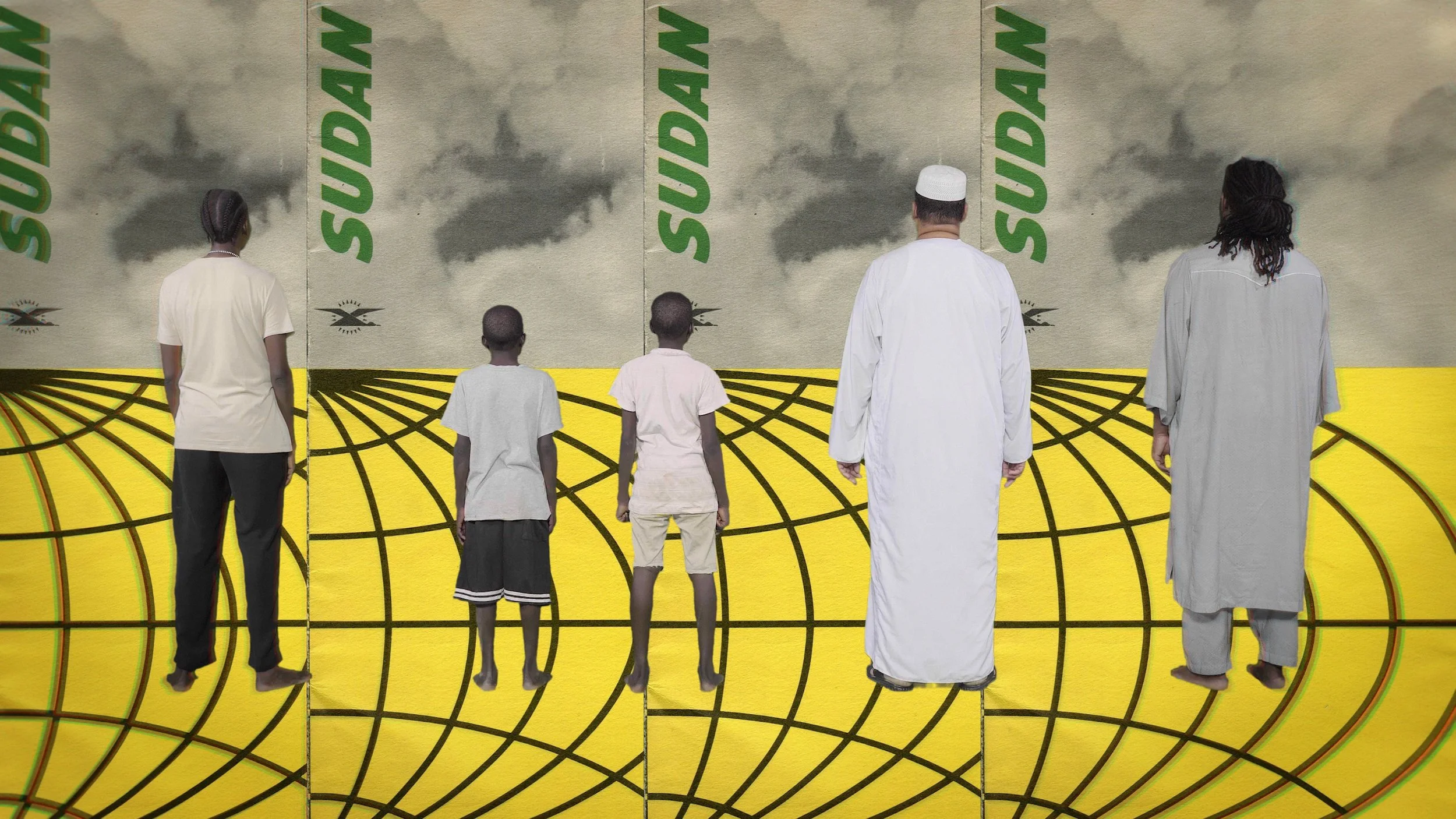
Khartoum (Anas Saeed, Rawia Alhag, Ibrahim Snoopy, Timeea M Ahmed, Phil Cox, 2025)
On the first day of November and the penultimate day of the Jali Weekender, Khartoum and its producer Talal Afifi join us. Talal is a Sudanese film curator and producer; he is also founder and director of the Sudan Film Factory, and the Sudan Independent Film Festival. His conversation is held by Rania Obead, a Sudanese activist and an architect. She is a member of the Sudanese Women’s Union and is now based in Edinburgh.
November continues. The United Nations declare a famine in Kadulgi, the capital of South Kordofan. It is reported that the Rapid Support Forces are killing, raping, and taking hostages.
*
In December, the Rapid Support Forces expand their offensive; the Sudanese Armed Forces escalate their air campaign. In Khartoum, 97% of households face food shortages; financial aid and food rations will soon decline.
*
January comes with the new year and the government returns to Khartoum, after operating from Port Sudan for the last three years. Communities return, too. With approximately 15,000 electrical transformers, minimal electricity is available for hospitals and water stations.
*
We – us three – speak some months later. How to discuss a discussion? It is Monday morning, in February: Rania is in Edinburgh and Talal is in Dublin. The Google Meet call lags, only a little - it is apt for a conversation in the past tense.
*
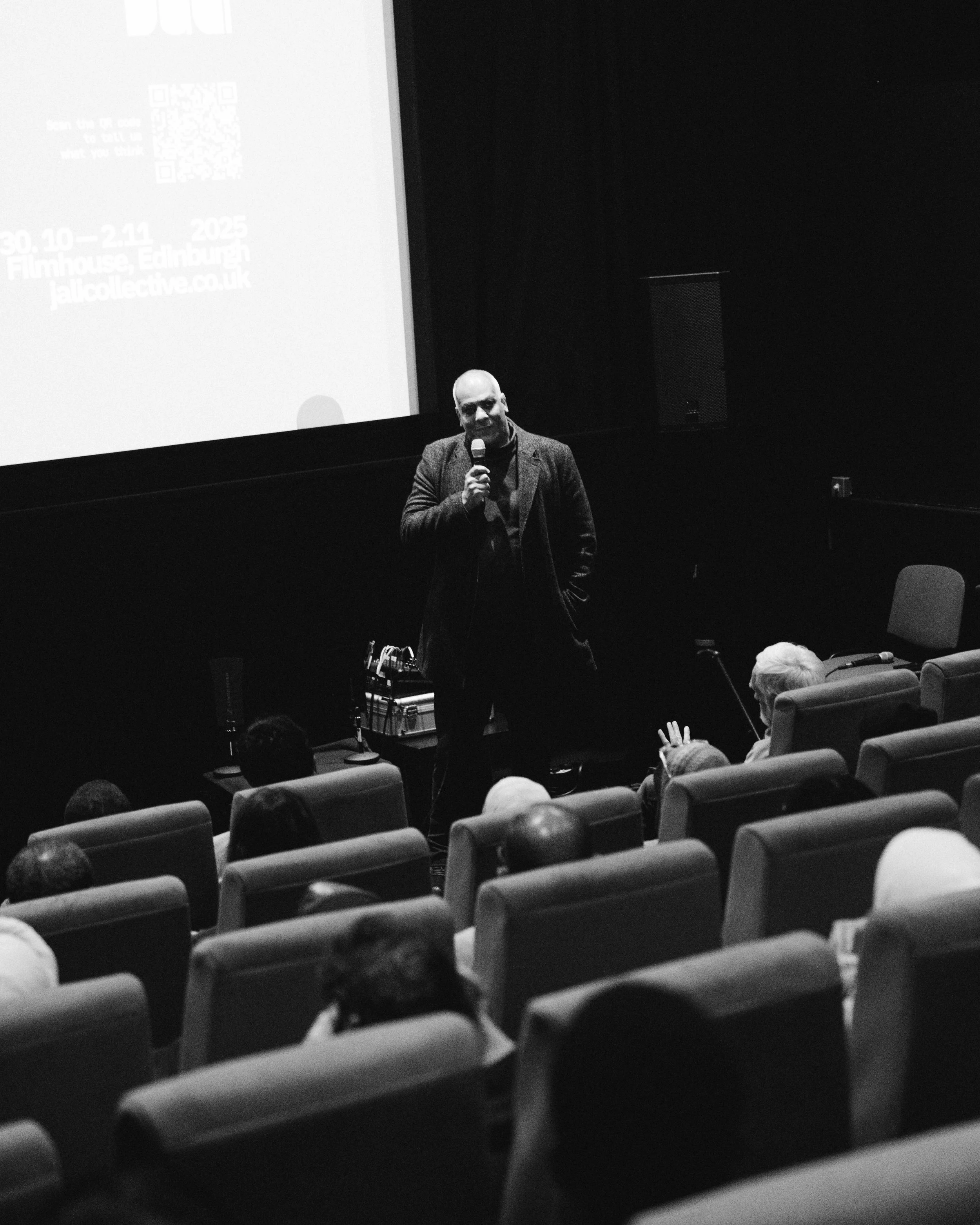
Photo credit: Uchechi (@byuchechi)
Khadmallah, Wilson, Loakin, Majdi, Jawad. Khadmallah is a mother and tea vendor. Wilson and Loakin, young boys, live on the streets and are best friends. Majdi is a civil servant and likes to race pigeons with his son. Jawad is a Sufi Rastafarian resistance volunteer and rides a motorbike. Before Khartoum, they do not know each other. Likely, they pass each other on the street – once or twice – but their paths do not cross.
‘Me as an audience, really, not as a producer, as an audience,’ says Talal, ‘– for me, watching the film, watching all the footage and material [...] I feel it was important for my life, the rest of my life, because the film does not only show what I went through. The diversity of the characters showed me what I didn't go through.’
*
Khartoum is filmed primarily on donated iPhone cameras. By April 2023, most of the intended film was recorded. Since April 2023, 15 million people have been displaced. Among them: Khadmallah, Wilson, Loakin, Majdi, Jawad. When the war arrived that month, all participants and directors were evacuated to Nairobi. ‘They all lived in one place, in one flat, and they shared everything,’ says Talal. ‘So this, this, was the real film [...] not B-roll footage. No, this is the main one.’
From Cairo, they retell their stories. A chapter opening: as their individual stories begin, they dance. Behind, a green screen takes on a single colour - purple, yellow. Patterns circle and stretch across it.
The green screen is used in their storytelling, too. They remember and Khartoum returns – illustrated, dreamlike. They take turns, directing each other in their own memories.
‘Majdi, you’re going to play the deaf man,’ says Khadmallah.
‘Okay, so I brought you in to act this story,’ says Jawad.
‘You have to do it like they did,’ says Loakin. He raises his arms – left, right – holding an imagined gun.
*
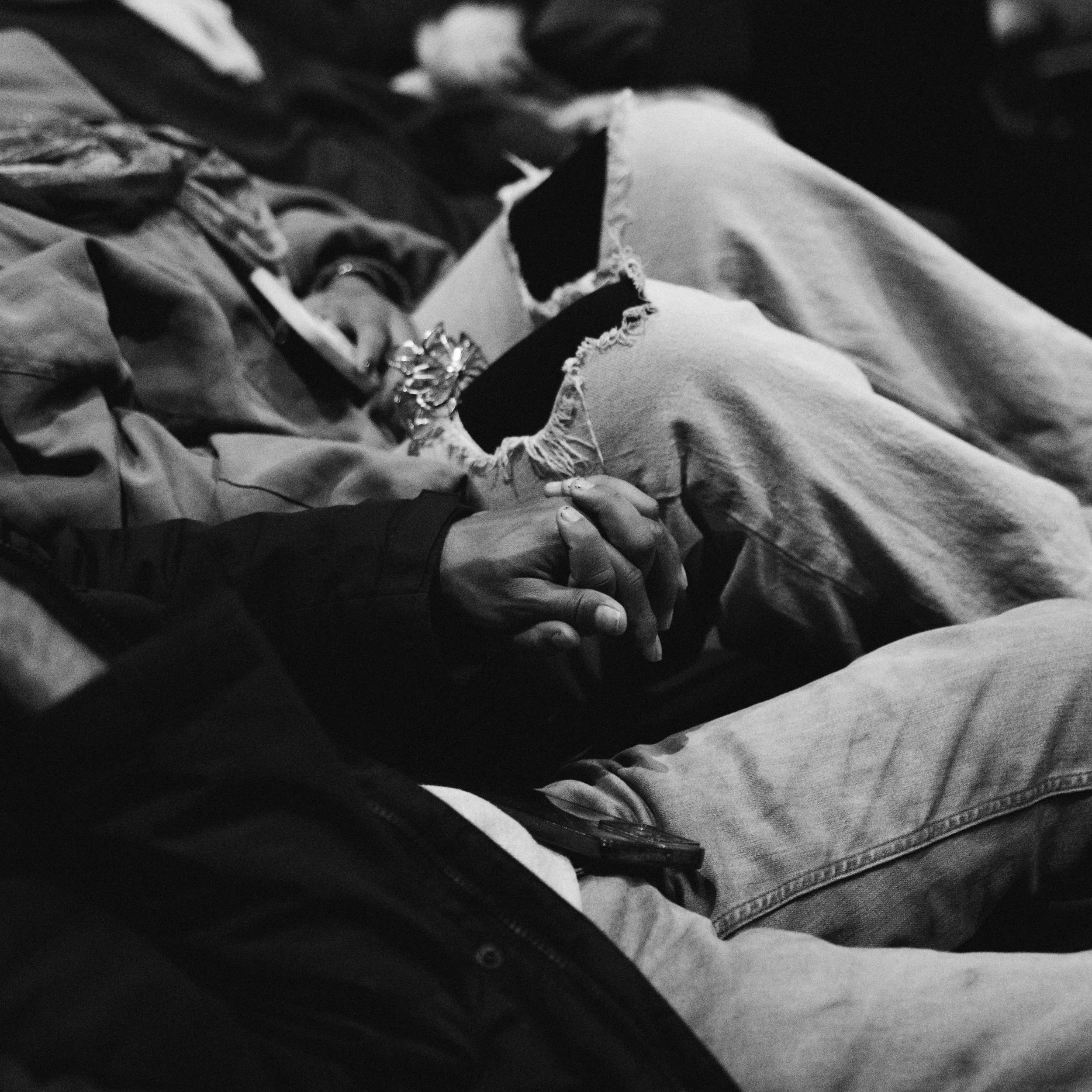
Photo credit: Uchechi (@byuchechi)
Rania watches Khartoum twice: at home alone, before the event, and at the Jali Weekender, with us all. ‘I remember during the movie, many Sudanese were in the room. Many of them, they really cry, cry a lot during,’ says Rania. ‘So it is not just normal movie you can watch in cinema.’
Rania remembers Jawad’s remembering. He mentions a bus ride, shared with a girl from his college: she offered him an earphone and they listened to a song, together. Sweet with youth and possibility. He speaks with his eyes closed and a smile tugs at his lips. ‘So even now we are in a war, we are in this situation, we’re really holding our memory. We’re really holding our country in this memory, inside us,’ says Rania.
*
In conversation, Talal speaks in Arabic and Rania translates. ‘I try to sense the floor,’ says Talal. He does not speak in Arabic at all Khartoum’s events; no, he tries to sense the floor, its dips and its humps. ‘I need sometimes to speak in Arabic. I am now three years away from Sudan and I miss my language [...] When I speak in Arabic, I feel like I flourish. It is like a healing for me.’
‘I tried to look in the eyes – the eyes were there, climbing, climbing in the air and trying to find meanings,’ says Talal. His hands clutch upwards – with movement, they translate to eyes, too.
Rania said yes, absolutely, when Talal asked if she would translate for him at the Jali Weekender. ‘I usually feel very difficult to transfer the emotion inside the words in another language. As Talal says, sometimes when people are so emotional, we would like to speak in our mother tongue,’ says Rania. ‘I try, I give it a try.’
*
Khartoum is only one city, Talal reminds. It is February now, and the Sudanese Armed Forces have ended the Rapid Support Forces’s siege of Kadulgi and Dilling, both in South Kordofan. Kordofan is the new centre of the war, the news outlets say.
*
‘No one knows what is going to happen next hour,’ says Talal. ‘We do not know what to do.’ For those within and outwith Sudan, the war continues.
Khartoum is heavy with awards and it is called upon, often, for screenings worldwide. Talal and all – participants, directors, producers – hope its success will bring a focus to Sudan, to its many cities, towns and villages in distress. ‘Khartoum is just a symbol,’ he says.
The conversation took place on Saturday 1 November 2025 after the screening of Khartoum at the inaugural Jali Film Weekender.
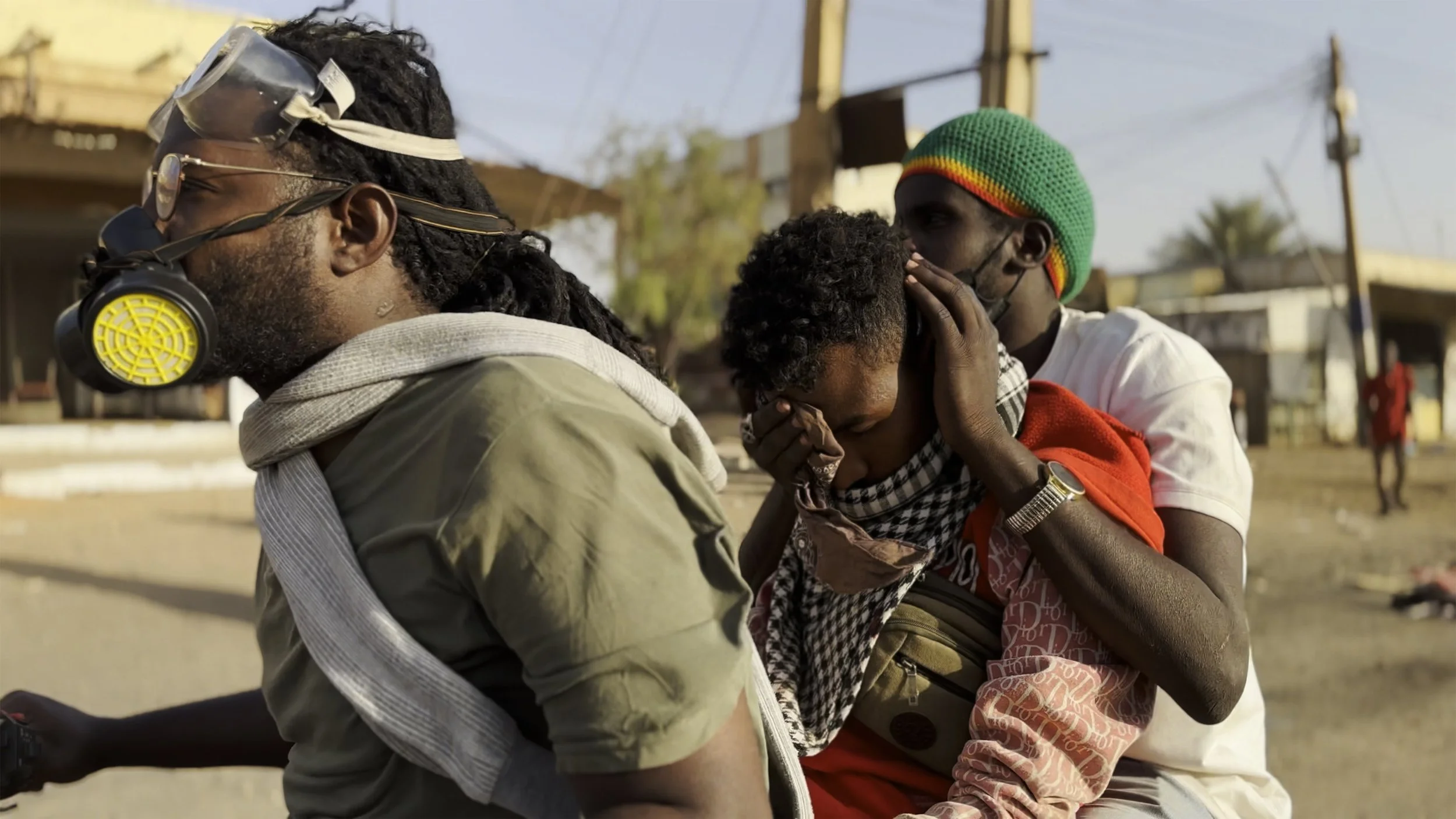
Khartoum (Anas Saeed, Rawia Alhag, Ibrahim Snoopy, Timeea M Ahmed, Phil Cox, 2025)